How to Choose a Quality Ashwagandha
Root, leaves, withanolides, analyses: useful criteria for comparing ashwagandha supplements.
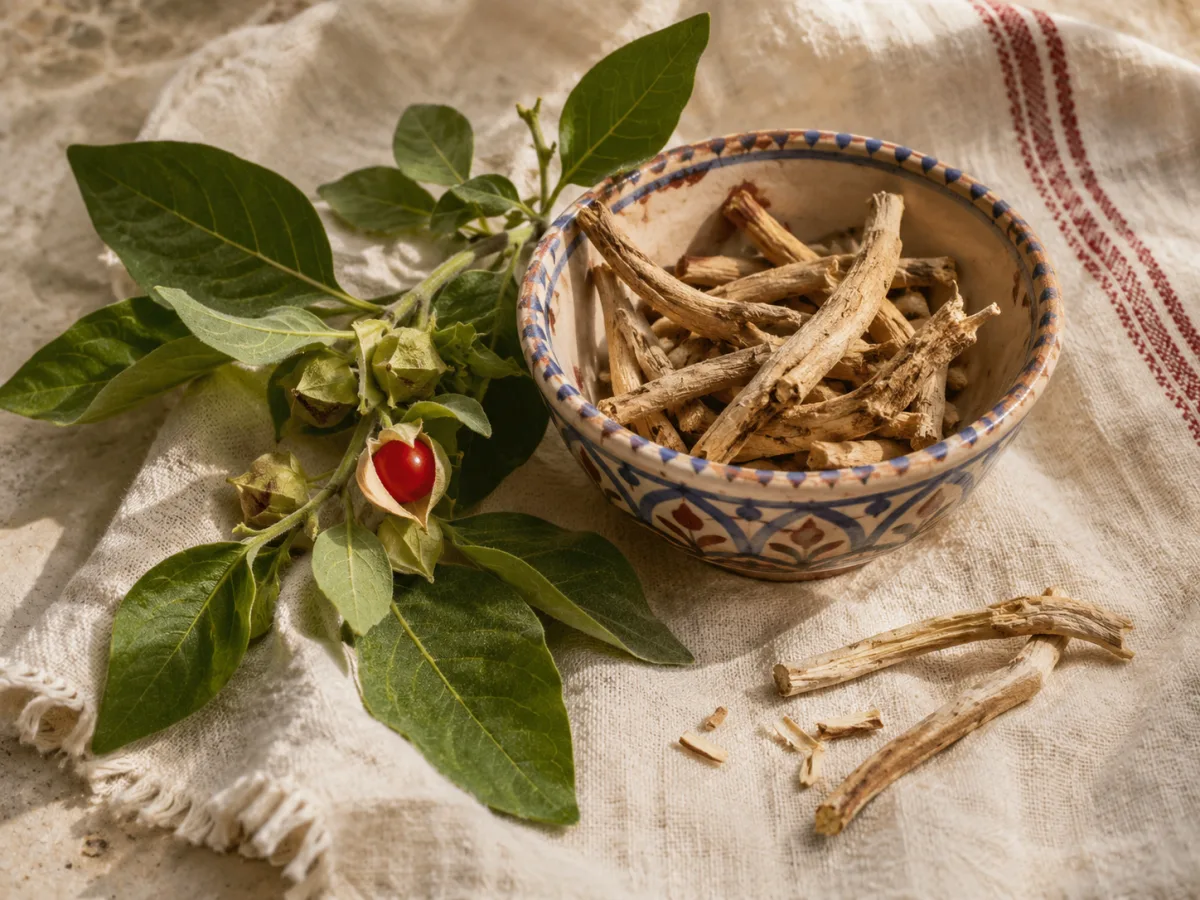
Two boxes of ashwagandha can display the same name while containing very different preparations. To compare them usefully, you need to look beyond the front of the package and read the technical information.
1. Check the Botanical Identity
The name Withania somnifera must appear clearly. "Indian Ginseng" is a commercial nickname that does not transform ashwagandha into real ginseng of the Panax genus.
2. Identify the Used Part
The root has the most well-known usage history. Some extracts combine root and leaves, with a different profile. The plant part must be declared so that the consumer knows what they are buying.
3. Distinguish Powder and Extract
A powder corresponds to the crushed plant; an extract is more concentrated and depends on the extraction process. The weight in milligrams is therefore not enough to compare two products. The withanolides content and the extraction ratio provide more context, without guaranteeing effectiveness on their own.
4. Look for Controls
Prioritize a brand that provides batch analyses concerning identity, heavy metals, pesticides, and microbiology. The mentions "natural" or "premium" are not proof of control.
5. Avoid Absolute Promises
"Cures anxiety", "boosts testosterone", or "detoxifies the liver" are warning signs. A serious manufacturer presents the limits, the at-risk populations, and the contact details of a person in charge.
6. Prefer Simplicity
A short formula makes it easier to understand what you are taking. Proprietary blends, whose quantities are not detailed, complicate the evaluation.
To remember: this content is informative and does not replace medical advice. In case of treatment, pregnancy, breastfeeding, or chronic illness, ask for advice from a healthcare professional.
Sources and Method
Article based in particular on the syntheses of the NCCIH, the monographs of the European Medicines Agency, and the recommendations of the Anses. Research results are distinguished from traditional uses.