Ginseng or Ginger: Why They Are Not the Same Plants
Their names resemble each other, but ginseng and ginger differ in their botany, compounds, and uses.
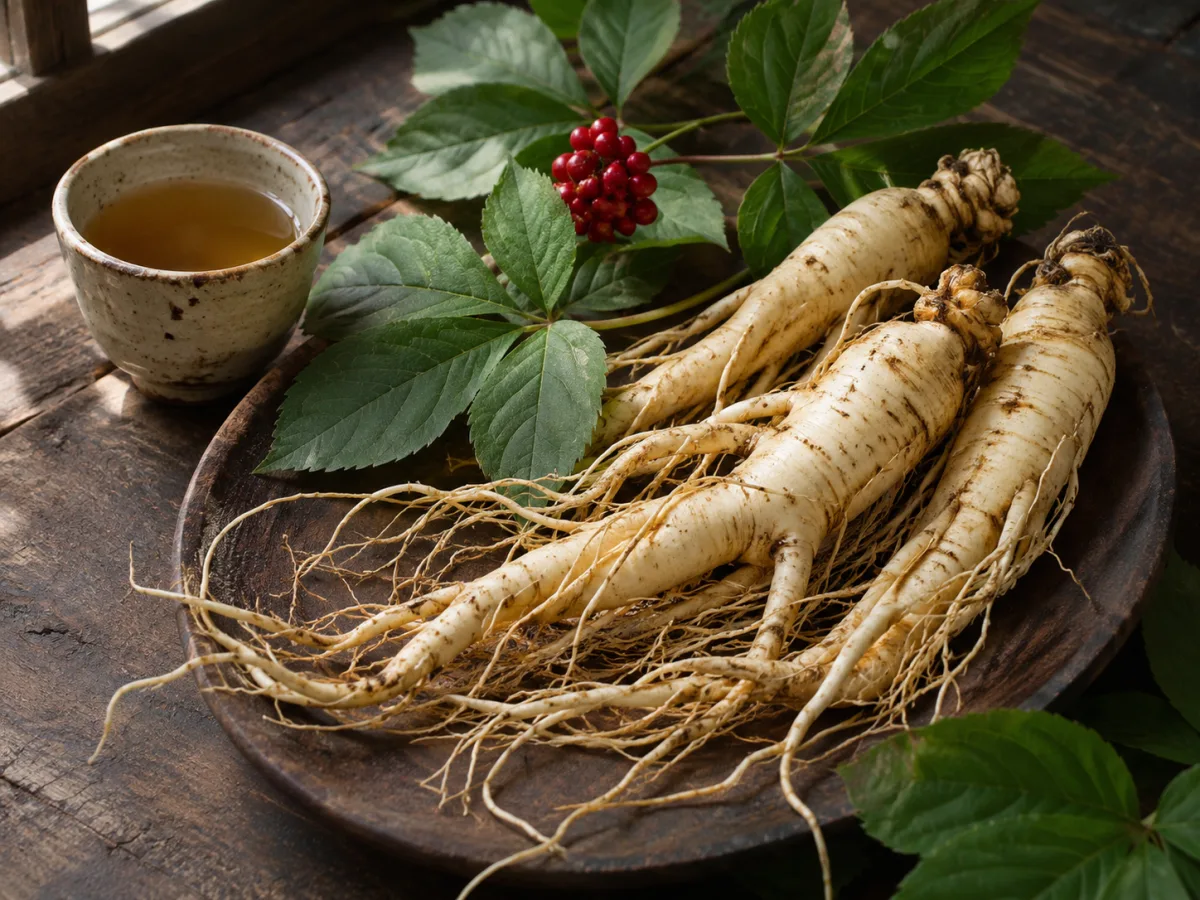
Ginseng and ginger often occupy the same shelf, but their resemblance largely stops at the sound of their name and the fact that an underground part is used.
Two Botanical Families
Asian ginseng is Panax ginseng, an Araliaceae. Ginger is Zingiber officinale, a Zingiberaceae. For ginseng, a root is used; for ginger, a rhizome, i.e., an underground stem.
Two Compound Profiles
Ginseng contains, in particular, ginsenosides. Ginger contains gingerols and shogaols, responsible for its spicy taste. They are therefore not interchangeable in studies or precautions.
Common Uses
Ginseng is sought after for fatigue or vitality, with variable evidence. Ginger is primarily a spice and has been studied, in particular, for certain nausea. Using ginger in cooking is not equivalent to taking a concentrated extract.
Why the Confusion Matters
Ordering "ginger" thinking you are buying ginseng, or vice versa, changes the product and the interaction profile. The Latin name on the label is the simplest way to avoid the error.
Can They Be Combined?
The combination is not automatically useful and can complicate tolerance, especially in people taking multiple medications. Before accumulating extracts, ask if each ingredient meets a real objective.
To Remember: this content is informative and does not replace a medical opinion. In case of treatment, pregnancy, breastfeeding, or chronic illness, ask for advice from a healthcare professional.
Sources and Method
Article based in particular on the syntheses of the NCCIH, the monographs of the European Medicines Agency, and the recommendations of the Anses. Traditional uses are distinguished from clinical evidence.