Asian Ginseng: A Guide to Understanding Panax Ginseng
Origin, ginsenosides, traditional uses, and level of evidence: a comprehensive guide to real Asian ginseng.
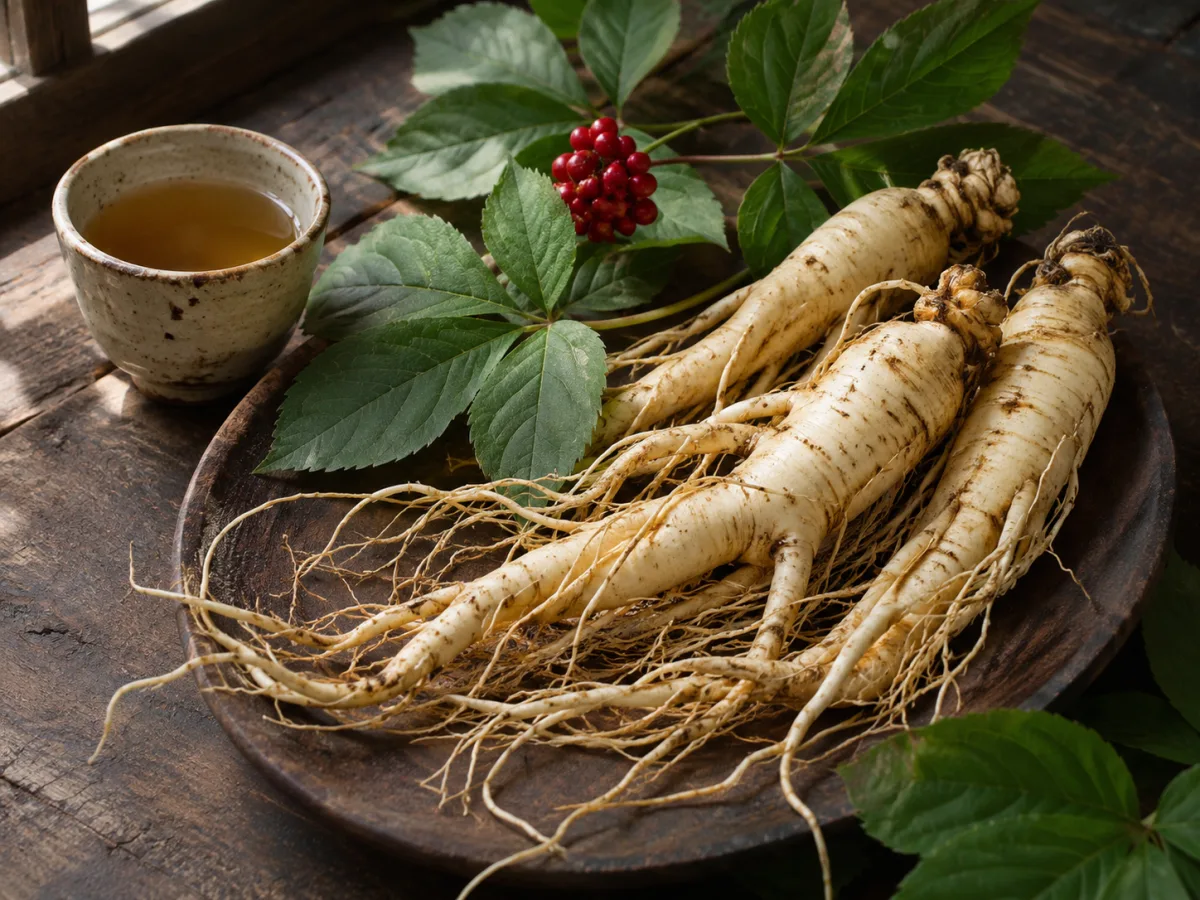
The name ginseng is applied to many plants, but Asian ginseng corresponds to Panax ginseng. Its root has been used for a long time in East Asia and is now found in extracts, drinks, and supplements.
What Does Ginseng Contain?
Its most studied compounds are ginsenosides, also called panaxosides. Their profile varies according to the age of the root, culture, processing, and extraction. A high total quantity does not say everything about the composition.
White Ginseng and Red Ginseng
They generally come from the same species. White ginseng is dried after harvesting; red ginseng is steamed before drying, which transforms some of its compounds. "Red" does not automatically mean superior.
What Research Explores
Studies focus on fatigue, certain cognitive functions, blood sugar, sexual function, and other topics. Trials are often small and short. The NCCIH considers the data on several uses to be still insufficient or contradictory.
Side Effects and Interactions
Insomnia is the most common side effect. Ginseng can influence blood sugar, coagulation, and certain immune responses. People treated for diabetes, taking anticoagulants, or living with an autoimmune disease should seek advice.
A Root is Not a Response to All Fatigue
Persistent fatigue can be related to sleep, a deficiency, an infection, the thyroid, a medication, or mental health. Looking for the cause remains a priority.
To Remember: this content is informative and does not replace medical advice. In case of treatment, pregnancy, breastfeeding, or chronic illness, seek advice from a healthcare professional.
Sources and Method
Article based in particular on the syntheses of the NCCIH, the monographs of the European Medicines Agency, and the recommendations of Anses. Research results are distinguished from traditional uses.