Ashwagandha or ginseng: what differences?
Origin, compounds, uses and safety: comparing ashwagandha and ginseng without confusing them.
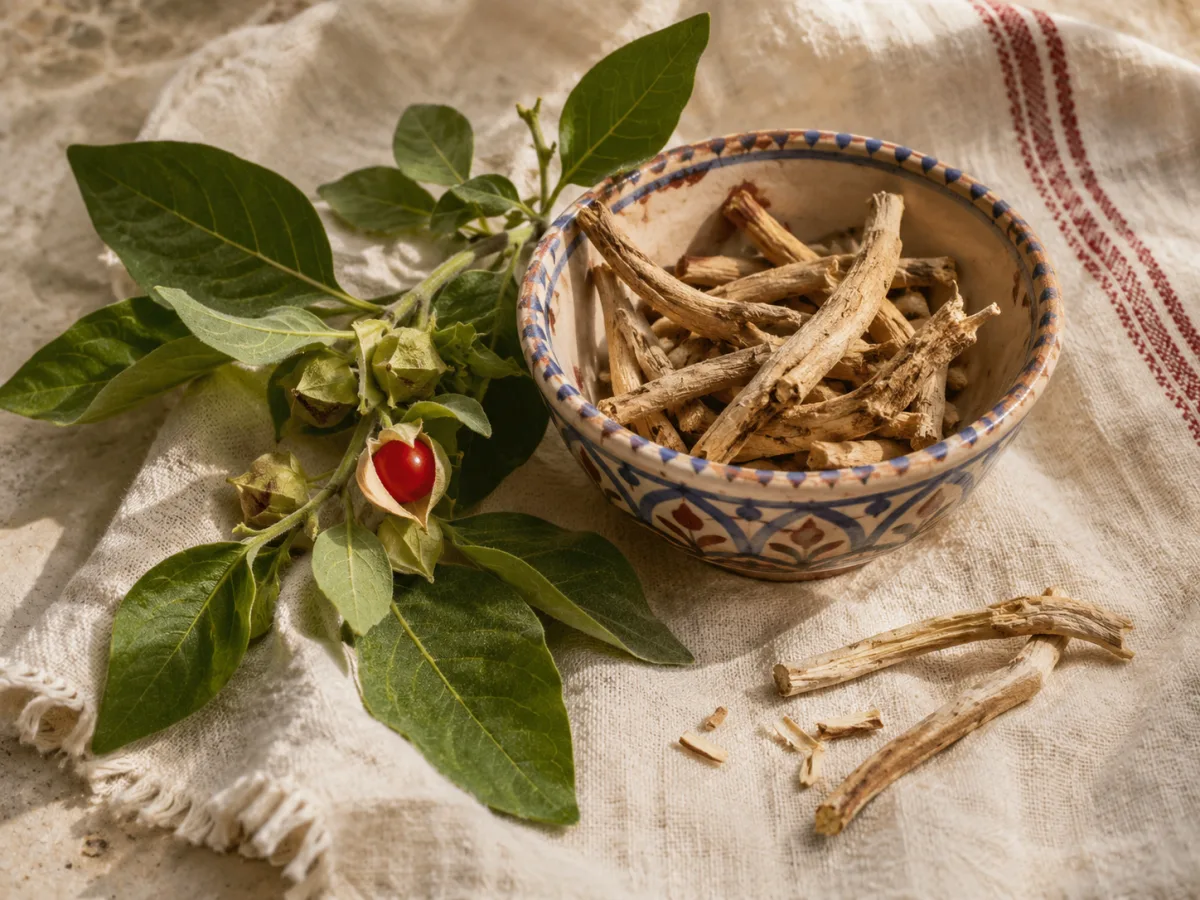
Ashwagandha is sometimes called "Indian ginseng", but this nickname maintains confusion. The two plants do not belong to the same botanical genus, do not contain the same compounds and do not share exactly the same safety profile.
Two botanical identities
Ashwagandha is Withania somnifera, from the Solanaceae family. Asian ginseng is Panax ginseng, from the Araliaceae family. The first is associated with withanolides, the second with ginsenosides.
Different popular uses
Ashwagandha is mainly sought after for stress and sleep. Asian ginseng is more presented for fatigue, concentration and vitality. These commercial positions should not be confused with proven medical indications.
What do the evidence say?
For certain ashwagandha preparations, signals exist on stress and insomnia. For Asian ginseng, research on fatigue or certain cognitive functions remains limited and sometimes contradictory. Neither one nor the other is a substitute for the treatment of a disease.
Two vigilance profiles
Ashwagandha requires particular caution for the thyroid, autoimmunity, somnolence and rare liver damage. Ginseng can promote insomnia, influence blood sugar and coagulation, and interact with medications.
How to choose?
Do not choose according to a "power" ranking. Start from your goal, your state of health, your treatments and the quality of the product. It may also be more relevant to choose no supplement before understanding the cause of fatigue or poor sleep.
To remember: this content is informative and does not replace a medical opinion. In case of treatment, pregnancy, breastfeeding or chronic illness, ask for advice from a health professional.
Sources and method
Article based in particular on the syntheses of the NCCIH, the monographs of the European Medicines Agency and the recommendations of the Anses. Research results are distinguished from traditional uses.