Ashwagandha: benefits, uses, and precautions
A clear guide to understanding ashwagandha, its traditional uses, what studies really show, and its precautions.
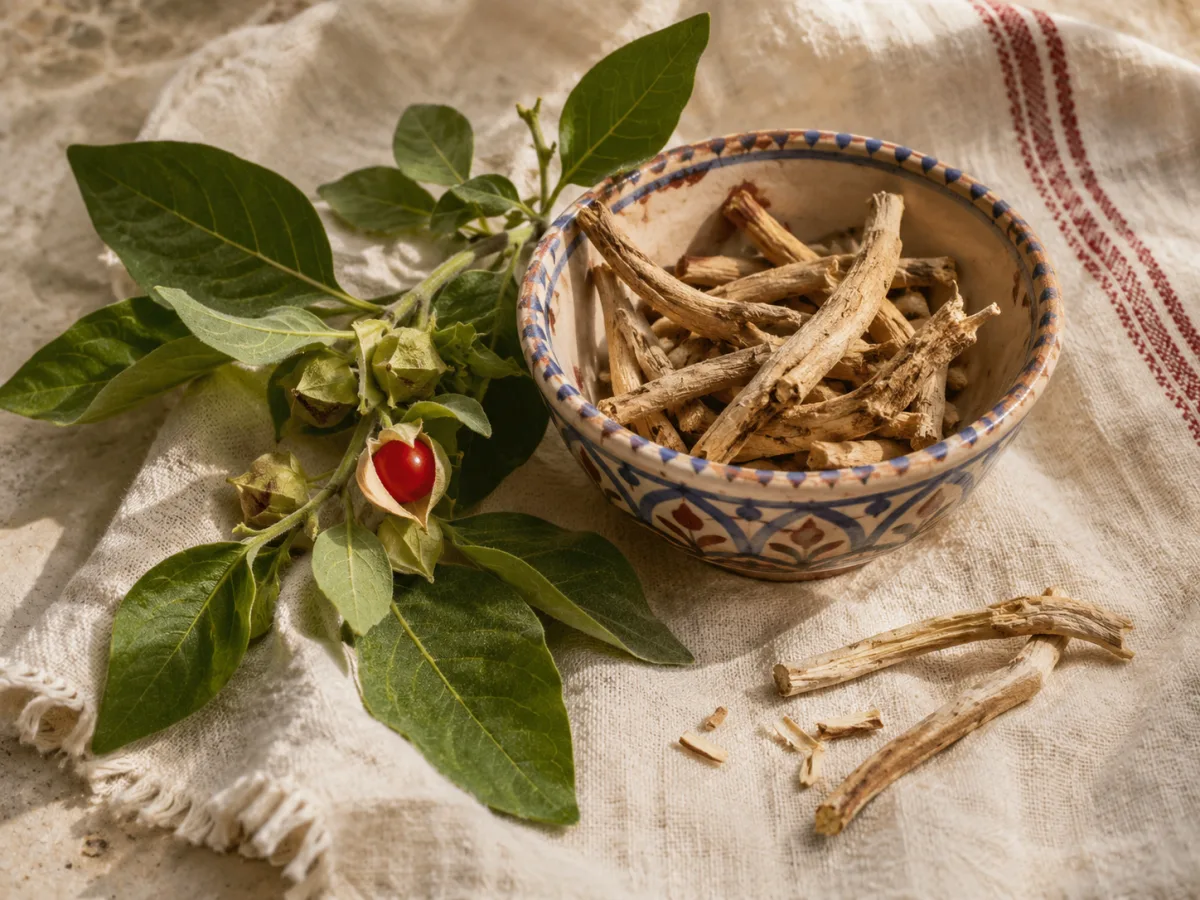
Ashwagandha, or Withania somnifera, is a shrub that has been used for a long time in Ayurvedic traditions. Its recent popularity is mainly due to a seductive promise: better coping with stress without feeling slowed down. But between heritage, marketing, and scientific data, it's necessary to put things in order.
Why is it called an adaptogen?
The word "adaptogen" describes a category of use, not a medical guarantee. It refers to plants presented as able to help the body adapt to different stresses. Ashwagandha contains compounds called withanolides, but their presence is not enough to prove effectiveness for each product.
What research suggests
According to the NCCIH, some preparations may help with perceived stress and insomnia. Trials are often short, conducted on small groups, and with very different extracts. Therefore, the result of a specific extract cannot be automatically applied to all powders and capsules on the market.
What is not established
The evidence is insufficient to conclude on athletic performance, memory, diabetes, menopause, or female fertility. A plant should not replace the diagnosis or treatment of persistent fatigue, anxiety disorder, or chronic insomnia.
Important precautions
Digestive disorders and drowsiness are possible. Rare liver damage has also been reported. Ashwagandha is not recommended during pregnancy and breastfeeding, as well as in cases of thyroid or autoimmune disorders without medical advice. Interactions are possible with sedatives, anticonvulsants, immunosuppressants, and certain treatments for blood pressure or diabetes.
How to read a product
Look at the botanical name, the used part, the type of extract, its standardization, and contaminant controls. A spectacular label never compensates for a vague composition.
To remember: this content is informative and does not replace medical advice. In case of treatment, pregnancy, breastfeeding, or chronic illness, ask for advice from a healthcare professional.
Sources and method
Article based in particular on the syntheses of the NCCIH, the monographs of the European Medicines Agency, and the recommendations of the Anses. Research results are distinguished from traditional uses.