10 plants known as adaptogens: uses and precautions
Ashwagandha, ginseng, rhodiola, eleuthero, and others: a comparative overview without exaggerated promises.
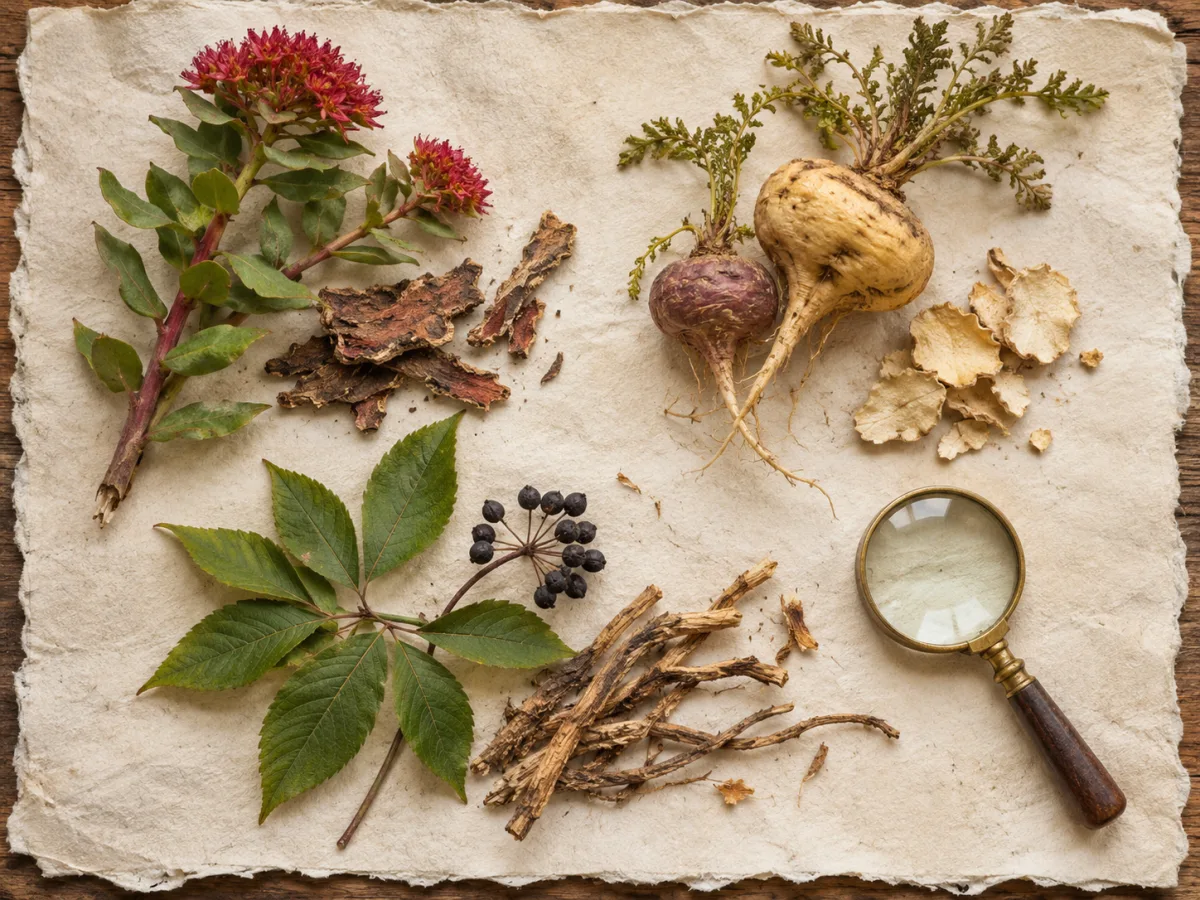
The term adaptogen brings together very different plants. Here is an overview to navigate, without presenting them as interchangeable or as treatments.
1. Ashwagandha
Withania somnifera is mainly studied for stress and sleep. Caution for thyroid, autoimmunity, pregnancy, and sedative interactions.
2. Asian ginseng
Panax ginseng is sought after for fatigue. It may favor insomnia and influence blood sugar and coagulation.
3. American ginseng
Panax quinquefolius has a different ginsenoside profile. The results of one ginseng do not automatically apply to the other.
4. Rhodiola
Rhodiola rosea is traditionally used for stress symptoms such as fatigue and weakness, but the EMA considers the clinical evidence insufficient for established use.
5. Eleuthero
Eleutherococcus senticosus is not a true ginseng. It has its own composition and its own precautions.
6. Schisandra
Schisandra chinensis is a vine whose berries are used traditionally. Medicinal interactions are possible.
7. Holy basil
Ocimum tenuiflorum, or tulsi, is an important plant in Indian traditions. Clinical data remains limited.
8. Astragalus
Astragalus membranaceus is often presented for immunity. Caution is advised with immunosuppressants and autoimmune diseases.
9. Maca
Lepidium meyenii is an Andean food often ranked among adaptogens by marketing, but this classification is debated.
10. Licorice
Glycyrrhiza glabra can increase blood pressure and disrupt potassium. Its presence in certain blends shows why 'plant' does not mean 'safe'.
To remember: this content is informative and does not replace medical advice. In case of treatment, pregnancy, breastfeeding, or chronic illness, consult a healthcare professional.
Sources and method
Article based in particular on the syntheses of the NCCIH, the monographs of the European Medicines Agency, and the recommendations of Anses. Traditional uses are distinguished from clinical evidence.